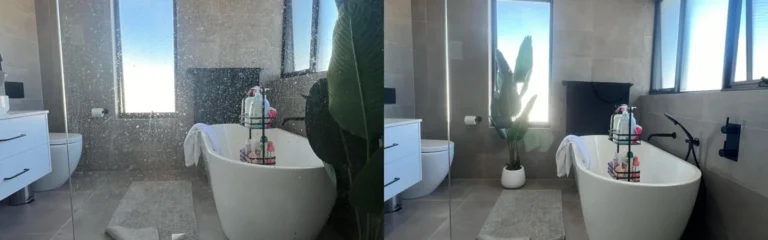
#Glass Restoration
Nanocoating for Hartung Glass
See More

The first step in refinishing a travertine floor is thorough preparation. This involves removing any furniture or obstacles from the area and ensuring that the surface is clean and free of dust and debris. Next, any existing coatings or sealers are stripped away using specialized products and equipment. This step is crucial to expose the raw travertine surface and prepare it for restoration. Additionally, any cracks or imperfections in the stone are addressed during this phase, as they need to be repaired before the refinishing process can proceed.
Once the surface is properly prepared, the restoration phase begins. This step involves honing and polishing the travertine to bring back its natural shine and smoothness. Honing is a process of using abrasive pads to remove surface scratches, etching, and stains, creating a uniformly smooth surface. After honing, the stone is progressively polished using finer grits until it attains the desired level of sheen, ranging from a matte finish to a high-gloss shine. This process enhances the stone’s natural colours and patterns, revealing its inherent beauty. If necessary, the grout lines are also cleaned and restored to match the newly refreshed travertine surface. Our travertine restoration process can include refinishing and resurfacing to address surface scratches, etching, stains and uneven finishes before the final polish is applied.
Our goals were driven by the need for better solutions to protect surfaces in various industries, which led to the creation of the 'Nano' in Nanoworx.
The final phase of refinishing a travertine floor involves sealing the surface to protect it from future damage and maintain its appearance. A high-quality, penetrating sealer is applied to the travertine, creating a protective barrier that repels stains, spills, and moisture. Proper curing time is allowed to ensure the sealer fully bonds with the travertine. Once the travertine refinishing and restoration work is complete, sealing helps protect the restored surface from future stains, spills and moisture.
Yes. Nanoworx provides travertine restoration in Perth for worn, stained and damaged travertine surfaces. Depending on the condition of the stone, the restoration process can include preparation, honing, polishing and sealing.
Yes. Nanoworx can restore worn travertine floors by addressing surface scratches, etching and stains through processes such as honing and polishing. Cracks and other imperfections can also be addressed during preparation.
It depends on the condition of the surface and the issues affecting it. Nanoworx can assess the travertine and determine the appropriate combination of preparation, restoration, honing, polishing and finishing required for the desired result.
The cost depends on the condition and size of the travertine surface and the restoration work required. Nanoworx offers a free consultation and quote so the required work can be assessed before the project begins.
Yes. Nanoworx's restoration process can address surface scratches, etching and stains through techniques such as honing and polishing. Existing cracks and imperfections can also be addressed during the preparation stage before restoration proceeds.
Yes. Nanoworx offers a free consultation and quote for restoration projects. You can contact the team to discuss your travertine surface, its condition and the restoration work required.

© Nanoworx • Site by c4 Digital Agency